
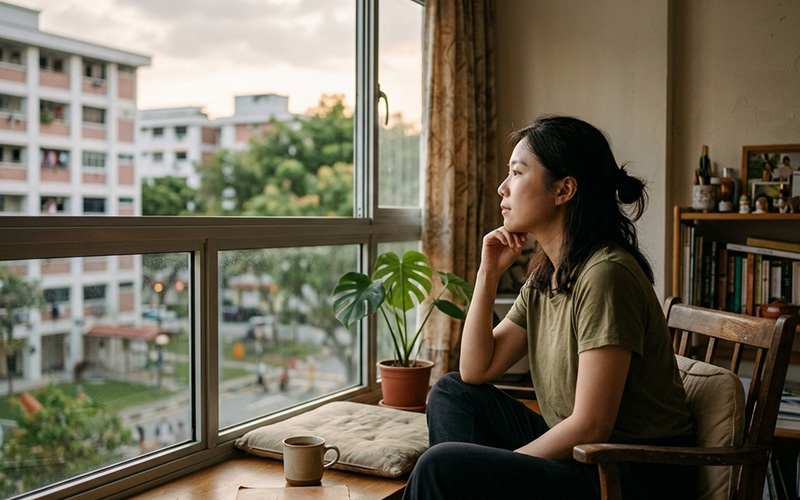
Have you noticed that your relationships tend to follow a familiar script? Perhaps you keep finding yourself in relationships where connection feels just out of reach. Or you give everything until you feel depleted, and the relationship falls apart. Or despite your best intentions, the same arguments surface, the same distances grow, and you end up in the same place of hurt and confusion.
If this feels true for you, you are not alone, and you are not broken. What you are experiencing is one of the most deeply human phenomena in psychology: repeating relationship patterns. Understanding why they happen is the first, most hopeful step towards changing them.
The numbers behind the loneliness many Singaporeans feel
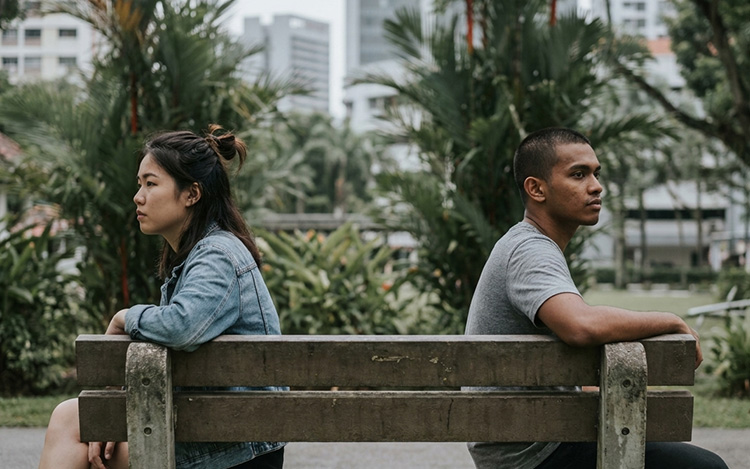
Across Singapore, the landscape of relationships and connection is quietly shifting. According to the Singapore Department of Statistics, there were 7,382 divorces and annulments recorded in 2024, with the median age at first marriage continuing to rise. At the same time, a 2024 poll by the Institute of Policy Studies (IPS) found that Singaporeans aged 21 to 34 reported the highest loneliness scores of any age group, with more than half saying they sometimes feel anxious talking to people in person.
Many people in this season of life are asking the same questions: who am I in relationships, what do I keep choosing, and why do I find myself re-experiencing certain familiar experiences?
What are relationship patterns, and where do they come from?

A relationship pattern is any recurring way of connecting, communicating, or experiencing conflict that shows up across your different relationships. It might be feeling like you are carrying more than your share, shutting down emotionally when someone gets too close, the pull towards people who you see as in need of “saving”, or withdrawing before someone can leave you first.
These patterns are not reflective of a character flaw. They are learned responses, often developed long before we had the language to understand them to help us meet certain needs the best way we knew how to at a point in time.
Psychologist John Bowlby’s attachment theory tells us that the ways we related to our earliest caregivers form an internal blueprint, what researchers call an “internal working model.” This is our internal sense of how relationships work: whether people are reliable, whether we are worthy of care, and whether closeness is safe or dangerous. By the time we enter adult relationships, these blueprints operate beneath our conscious awareness, quietly influencing who we are drawn to and how we behave when things become emotionally difficult.
Research by Hazan and Shaver (1987) confirmed that the same attachment patterns formed in childhood continue into adult romantic relationships. Subsequent studies estimate that roughly 40 to 45 per cent of adults carry an insecure attachment style into their relationships, often without realising it.
Why do the patterns keep repeating?

Why relationship counselling matters, even when you are single

You do not need to be in a relationship for these patterns to become visible or workable. Some of the most meaningful deep personal work happens outside of a relationship. That’s when there is more space to look inward and heal without the distractions that comes with being in a relationship. Relationship counselling for singles focuses on this: understanding your own relational world so that you can step into future connections from a place of greater clarity and self-knowledge.
In individual relationship counselling, the focus is entirely on you: what you feel, what you fear, what you value, and what behavioural patterns you have been displaying without realising it. A counsellor does not offer advice or tell you what to choose. Instead, they help you develop a clearer relationship with yourself, which is the foundation from which different choices become possible.
Here is what that process might look like:
Developing genuine self-awareness. Many of us can name our patterns in retrospect, after the relationship has ended. In counselling, you begin to notice them as they are happening and understand the link between old experiences and present reactions.
Making sense of your emotional world. Some people come to counselling feeling emotionally numb. Others feel their emotions intensely but struggle to find solid ground. Counselling creates the safety to explore your inner experience in a paced and supported way in order to process them and understand them deeply.
Recognising what you are actually looking for. Repeated disappointments can leave people confused about what they truly want and need. The counselling process helps you hear your own voice more clearly and understand what kind of connection genuinely nourishes you.
Learning to respond rather than react. Over time, you develop the capacity to pause and choose your response rather than react in an automatic way. You grow to see more and more the moments of choice and the choices you have, where before there only seemed to be one way.
You can develop a new way of relating

Perhaps the most hopeful finding in attachment research is what researchers call “earned secure attachment.” A 2024 study published in Psychological Reports found that approximately 20 to 25 per cent of securely attached adults did not have fortunate childhoods. They arrived at relational security through later-life corrective experiences, including therapy. Research further shows that these individuals function just as well in their relationships as those who were securely attached from the beginning, across measures of relationship satisfaction, emotional regulation, and overall wellbeing.
Your early experiences do not determine your relational future. The brain remains capable of forming new patterns throughout life. What shifts the course is a matter of personal undertaking – to develop awareness, seek out support in change, and consistent work to grow the inner self.
You may also find it helpful to read our article on marriage counselling for individuals, which explores how understanding your own relational patterns is often the most meaningful place to begin to address relationship challenges. For those who see patterns trace back to early family experiences, our piece on parent-adult child relationships explores how what we learnt in our families of origin impact ow we connect as adults.
Why people choose In Focus
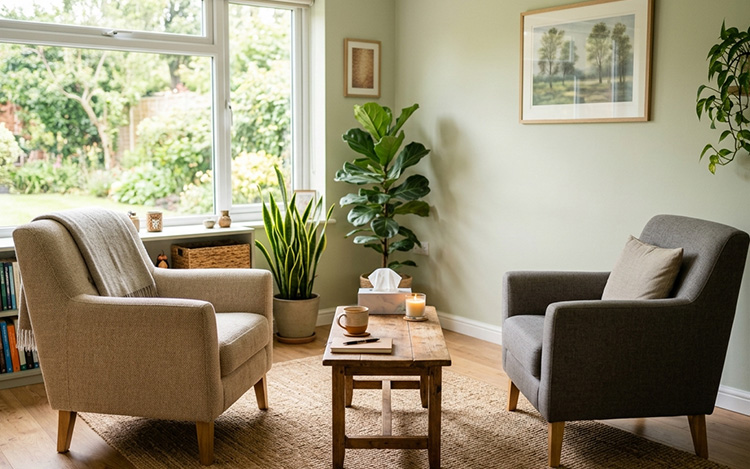
Begin with a complimentary call

Counselling is not always comfortable. Connecting more deeply with yourself can surface emotions you had long kept at a distance, and some people find that life feels more complex before it feels clearer. This is a normal part of the journey, and it is why continuity matters. At In Focus, sessions are held weekly or fortnightly, so that you always have close and consistent support as the work unfolds.
We are also mindful that quality counselling should be accessible. Our fees start from S$150 per 60-minute session for individuals, making In Focus one of the more affordable private practices offering this level of professional care in Singapore.
Before you commit, we invite you to begin with a complimentary introductory call. It is a conversation where we take the time to understand what you are going through, share how we work, and explore whether we are the right fit for each other. No pressure, no obligation.
If you are ready to understand yourself more deeply and step into your relationships from a place of greater clarity, we would be glad to walk alongside you.
Reach out to the In Focus team here to book your complimentary call.