
Singaporean couple sharing a warm, connected moment together, representing the decision to seek marriage counselling in Singapore before difficulties deepen

When Is the Right Time for Marriage Counselling? What Couples in Singapore Need to Know

The honest answer is: sooner than most couples think.

Many couples wait until things feel unbearable before reaching out for support. By that point, the patterns between them have often become deeply familiar and harder to shift. The good news is that marriage counselling does not have to be a last resort. It works best when it is not.

If you have been sitting with that question of whether now is the right time, this article is for you.

Most Couples Wait Too Long
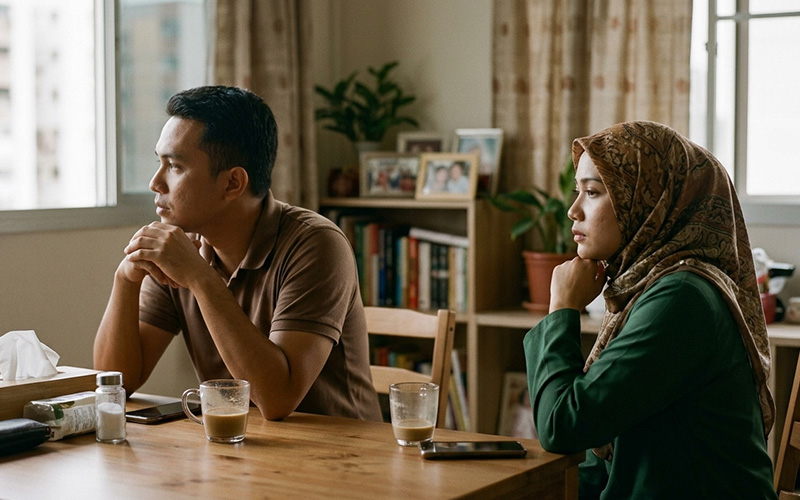
Singaporean couple sitting in silence at home, reflecting the reality that many couples in Singapore wait too long before seeking marriage counselling

Relationship researcher Dr John Gottman has noted that unhappy couples commonly wait around six years after difficulties first arise before seeking professional help. Six years is a long time to carry recurring conflict, unspoken frustration, and growing emotional distance.

Singapore’s own data tells a similar story. According to the Ministry of Social and Family Development’s Family Trends Report 2025, the median age at divorce in Singapore has been rising steadily, with many couples separating only after more than a decade together. While this partly reflects later marriages, it also points to something that we see in our work at In Focus: some couples often endure difficulties quietly for years, hoping things will improve on their own.

While in some cases, they may lessen in intensity for various reasons, but if it is not arising from intentional effort, unaddressed issues or interaction dynamics do not resolve themselves.

You Do Not Need a Crisis to Seek Counselling

This is perhaps the most important thing to understand. Marriage counselling is not reserved for relationships on the verge of collapse. Couples come to counselling at all kinds of stages, and for all kinds of reasons.

In our work with couples, some of the most common things people bring to sessions include:

Communication difficulties. Conversations that go in circles, or escalate quickly, or simply stop happening. A persistent sense of not being truly heard, even when both partners are trying.

Emotional distance. A quiet drift where the closeness that once felt natural now takes effort, or has faded without either person knowing quite when it happened.

Recurring conflict. The same arguments, the same impasse, the same unresolved tension resurfacing again and again.

Unresolved hurts. Past disappointments or moments where trust was shaken that continue to shape how you relate to each other today.

Life transitions. Becoming parents, navigating career changes, caring for ageing family members, or adjusting to new living arrangements can all shift relationship dynamics in ways that are hard to manage without support.

Wanting to invest in the relationship proactively. Some couples come to counselling because they want to build a stronger foundation before difficulties intensify. This is one of the most valuable ways to use counselling.

None of these require things to have reached breaking point. They are all legitimate and worthwhile reasons to begin.

Singaporean couple walking together outdoors, showing that marriage counselling can support relationships at any stage, not just in crisis

What the Research Says About Timing

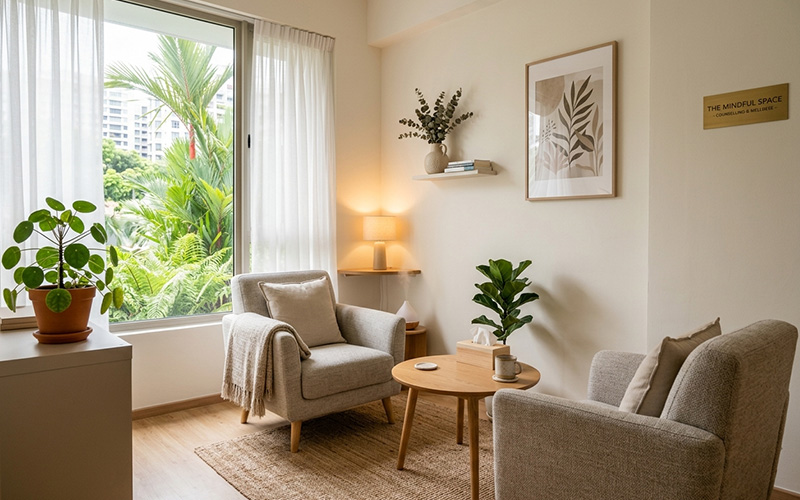
A calm counselling session setting in Singapore, representing evidence that seeking marriage counselling earlier leads to better outcomes

The evidence on timing is clear. Research consistently shows that couples who seek professional support earlier, before patterns become entrenched, tend to experience better outcomes. According to the American Association of Marriage and Family Therapists, around 90% of couples who engage in therapy with a qualified therapist report improvements in their emotional wellbeing, and the majority report greater relationship satisfaction.

What this means in practice is that reaching out while there is still warmth and goodwill between you gives the process the best possible foundation to build from. Counselling is not about repairing something broken. It is about helping two people understand each other more deeply and relate to one another more effectively, at whatever stage the relationship is at.

When Only One Partner Is Willing
A Singaporean person sitting alone thoughtfully, representing starting individual relationship counselling in Singapore when only one partner is ready

It is common for one partner to feel more ready than the other. If your partner is not yet open to coming, that does not mean nothing can be done. Individual relationship counselling can be a valuable starting point, helping you gain greater clarity about your own patterns, needs, and ways of responding within the relationship.

Some of the most significant shifts we have seen in couples begin with one person choosing to do their own work first. When one partner begins to respond differently, the dynamic between both partners may begin to shift too. The other partner may, in time, become more open to joining the process.

You can read more about this in our article on Marriage Counselling and Relationship Counselling for Individuals: Why the Best Relationship Work Starts With You.

What to Expect When You Reach Out to In Focus

At In Focus, we begin with a complimentary 20 to 30 minute consultation call before any sessions are scheduled. This is a space for you to share what you are experiencing, ask questions, and get a sense of how we work. It also gives us the opportunity to understand your needs and explore whether we are a good fit for your journey together. Arrange your complimentary call here. Our approach to couples work is personalised to each couple. Because every relationship is shaped by two people with different histories, communication styles, and emotional needs, there is no single formula we apply. What we bring to every session is a humanistic, person-centred approach grounded in genuine care for both partners. Our work with couples draws on Emotionally Focused Couple Therapy (EFCT) and Choice Theory Reality Therapy (CTRT), alongside other complementary approaches, tailored to what each couple needs. We are committed to creating a space where honest conversation can happen without fear of judgement or pressure. Sessions are held weekly or fortnightly, with each session running approximately 1.5 hours on average. We also carry out periodic reviews throughout the counselling journey, so that both you and your counsellor can reflect on progress, revisit your goals, and ensure the work continues to feel relevant and meaningful to where you are. Our counsellors hold at least a Master’s degree in counselling or a related field, have received advanced specialised training in therapeutic approaches, and are registered counsellors in good standing with the Singapore Association for Counselling. Our work is further informed by systemic theory, attachment theory, and neuroscience.

So, When Is the Right Time?

Singaporean couple holding hands gently, symbolising the decision to seek marriage counselling in Singapore and take the first step together

If you are asking the question, it is probably now.

You do not need to wait until things become unmanageable. You do not need a dramatic turning point. What you need is a willingness to take that first step, and we will journey with you from there. We work with couples across all stages of a relationship and from all walks of life, regardless of background, nationality, or the nature of the relationship.

When you are ready, arrange your complimentary consultation call with one of our counsellors here. We look forward to hearing from you.

Scroll to Top

Chan Pei Lin

Master of Guidance and Counselling (MGC)

Counsellor Masters in Guidance and Counselling (MGC), James Cook University Bachelor of Arts (Psychology), University of Buffalo New York State

I have always had a keen interest in working with children and youth. I find it fulfilling and meaningful to be working, supporting and guiding them, and I now have more than eight years of experience in this area. After graduating from the University of Buffalo, New York State with a Bachelor of Arts in Psychology, I started working with children and youth with Special Needs in early intervention. From my interactions with my clients over these years, I have come to see that being able to provide the emotional support that they and their families need is very important.

Being diagnosed with dyslexia and tactile defensives (Sensory Integrative Disorder), I remember the unconditional and judgement-free support I received from families and friends that got me through the various challenges. Therefore, I aim to offer the same unconditional support and judgement-free interaction to all my clients. Through my personal experience, I understand how crucial it is for individuals to develop a strong emotional foundation and a support network, especially those in similar circumstance. Therefore, I strongly believe in journeying and supporting individuals through stressful times, and in working with their loved ones through the strengthening of the bonds within the family unit.

I am trained in the major counselling and therapeutic approaches and also in Choice Theory Reality Therapy and Behavioural Therapy. My work is informed by Person Centred Therapy, Emotion Focused Therapy, and Emotionally Focused Couple Therapy. Beyond children and youth, I have counselled clients in other settings and age groups including young adults and families. I am particularly interested in supporting people in building resilience and skills to cope with stress, anxiety adjustments and overall socio-emotional needs. Given my own personal and work experience, I firmly believe that everyone deserves a chance in a fulfilling life. To better support my clients, I am currently pursuing my certification for Choice Theory and Reality Therapy after obtaining my Masters in Guidance and Counselling at James Cook University.

Evelyn Rochelle Koh

Senior Principal Counsellor, Counselling Psychotherapist, Clinical Supervisor

Master of Social Science (Counselling), CTRTC, EFT, EFCT
Clinical Supervisor & Instructor (Senior Faculty of William Glasser International & William Glasser Institute, Singapore)

Certified Human Behaviour Analyst (DISC)
Certified PREPARE-ENRICH

I developed a passion in counselling when I started out as a school volunteer counsellor working with youth. I saw the transformative power of the counselling relationship on the youths in school and even later in life beyond school. This was a life changing experience for me and I was spurred to setup my own private counselling and psychotherapy practice in 2004. That was a time when there were few counselling and consultation services in Singapore. Since then, I have been working with youths, couples, parents, working adults on their emotional issues and mental health and well-being through counselling and psychotherapy for over 20 years.

Beyond helping my clients within the counselling room, I believe in tapping on the multiplier effect to bring healing and strength to individuals, and relationships between couples and within families. I thus expanded my work and I now devote a large portion of my time towards raising the skills and competencies of the helping profession through lecturing, training, clinical supervision and consultancy services.

My area of passion and specialisation is Choice Theory, Reality Therapy, Lead Management (CTRTLM) because it is highly empowering. I thus find great joy in training counsellors, therapist, social workers, coaches, leaders and managers in this area.  I am also trained in Emotion Focused Therapy, Emotionally Focused Couple Therapy and Gottman Couples Therapy and my work is also informed by therapeutic models such as Positive Psychology, Humanistic Therapy, Experiential Therapy and Systemic Family Therapy.

I am grateful to have the opportunity to work with organisations across different sectors, ranging from Youth Centers, Family Service Centers and Specialist Centers to the Health Promotion Board (HPB) and Ministry of Education (MOE). The latter two involved projects where I was able to share my passion for helping youth in Singapore. With the HPB, I helped develop the Peer Support Program for youth and conducted training for youth leaders from tertiary institutions and for those involved in the online peer support network “Youthpals”. With the MOE, I conducted cluster training for school counsellors and teachers on counselling and therapy skills to better help our students.

It is also my firm conviction that all situations of loss and pain can be opportunities for deep healing, growth and connection. I have thus been committed to providing regular training on the topic of “Grief and Loss” to social service practitioners through the Social Service Institute (SSI).

Curriculum Vitae

  • Registered Singapore Counselor with Singapore Association for Counselling (SAC)
  • Registered Clinical Supervisor with Singapore Association for Counselling (SAC)
  • Registered Social Service Practitioner with Singapore Association of Social Workers (SASW)
  • Professional member of the American Counselling Association (ACA)
  • Senior Faculty member as Approved Instructor and Supervisor of William Glasser International and William Glasser Institute, Singapore. At William Glasser Institute, Singapore, Evelyn is serving in the Executive Committee to advocate Dr. William Glasser’s teaching in Choice Theory Psychology, Reality Therapy and Lead Management.
  • External Lecturer/ Clinical Supervisor, Swinburne University of Technology
  • Clinical Supervisor, James Cook University Singapore, Monash University
  • Associate Adult Educator, Social Service Institute
  • Trained in Gottman Couples Therapy, The Gottman Institute
  • Trained in Emotion-Focused Therapy, York University, EFT Clinic
  • Trained in Emotionally Focused Couple Therapy, International Centre for Excellence in Emotionally Focused Therapy, Canada